
Hallo zusammen!
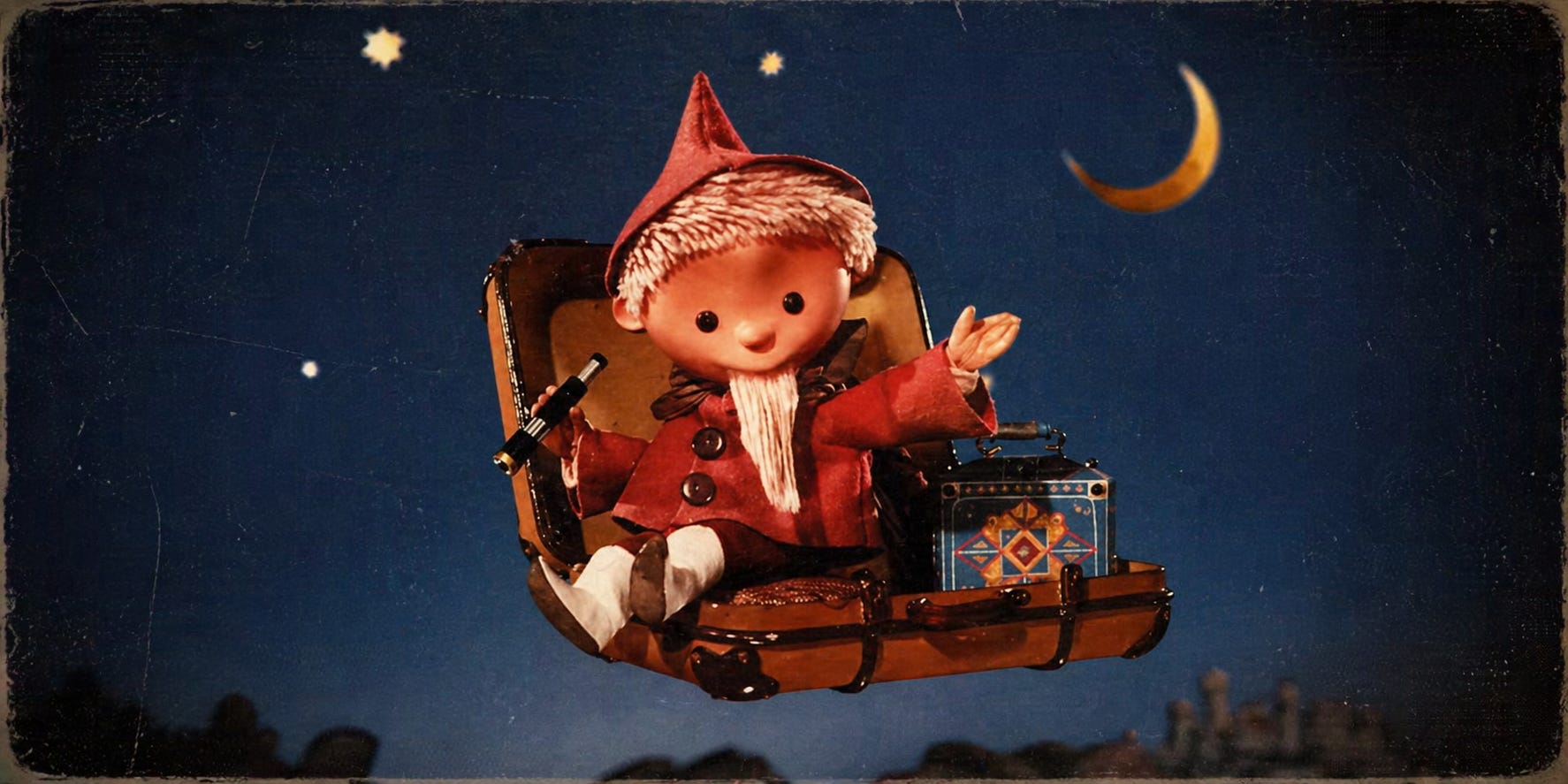
Today, we’re talking about a DDR classic. I guarantee you, almost everyone in Germany (east and west) can hum or sing the title melody of that program. I’d even bet that most of you who are from Ukraine, Russia, Poland, Czechia, Slovakia, Hungary, or Bulgaria will know this little fellow.
If you don’t know him, why don’t you go ahead and watch an episode and tell us what you think?

Part 1 - Read 👀
Read the Dialogue (out loud if you can)
Petra: Mike. Was guckst du da?
Mike: Nichts.
Petra: Das ist das Sandmännchen.
Mike: Ich schau's wegen dem Schlaf. Das ist wissenschaftlich belegt ⍟, dass Routinen beim Einschlafen helfen.
Petra: Du guckst das Sandmännchen und redest von Wissenschaft.
Mike: Es funktioniert. Der Typ kommt, erzählt seine Geschichte, streut Sand - und ich bin weg. Besser als jeder Podcast.
Petra: Okay, ich lach ja nicht mehr. Ich hab das als Kind jeden Abend geguckt. Ohne Ausnahme. Meine Mutter hat gesagt, solang das Sandmännchen nicht war, geh ich nicht ins Bett.
Mike: Genau so war das bei mir auch. Das war so ein Ritual, weißt du? Erst Sandmännchen, dann Zähneputzen, dann Licht aus. In dieser Reihenfolge, immer ⍟.
Petra: Und die Melodie - die geht sofort ins Hirn. Ich hör die ersten zwei Töne und werd automatisch müde. Nach dreißig Jahren noch.
Mike: Pavlov lässt grüßen ⍟.
Petra: Was mich als Kind immer gewundert hat - der Sandmann kommt aus dem Osten. Der ist ja eine DDR-Figur eigentlich.
Mike: Ja, aber der hat die Wende überlebt, was nicht viele geschafft haben ⍟. Den wollte niemand abschaffen - Ost und West waren sich mal einig.
Petra: Das ist vielleicht das Versöhnlichste, was die deutsche Nachkriegsgeschichte hervorgebracht hat.
Mike: Ein Männchen mit Rakete und Schlafsand.
Petra: Genau. Und du guckst's mit dreiunddreißig zum Einschlafen.
Mike: Wir gucken's ⍟. Du sitzt ja jetzt auch da.
You just read how people actually talk about this topic. Now comes the part that makes it stick: hearing it, understanding the expressions, and using them yourself.

Part 2 - Listen 👂
Hear the Dialogue (switch to slow version if the original is too quick)
Audio 🎧
Slow Audio ⏳

Part 3 - Understand 💡
Read the explanations & translation (take your time, ask questions in the comments if something is unclear)
A) Explanations 💬
⍟ das ist wissenschaftlich belegt – A spoken phrase used to back up a claim with an appeal to science or research, often delivered with mild self-awareness or humor when the claim itself sounds a little absurd in context. (English: “that’s scientifically proven” or “there’s research behind that”)
⍟ in dieser Reihenfolge, immer – A short, emphatic spoken addition used to stress that a sequence of actions was fixed and non-negotiable, common when describing rituals, habits, or personal rules. (English: “in that order, every time”, literal: “in this sequence, always”)
⍟ Pavlov lässt grüßen – A witty, widely used spoken reference to conditioned response, dropped into casual conversation when someone notices that a stimulus automatically triggers a reaction in themselves or others. (English: “Pavlov says hello” or “classic Pavlov”, literal: “Pavlov sends his regards”)
⍟ der hat die Wende überlebt, was nicht viele geschafft haben – A natural spoken construction used to note that something or someone survived a major rupture or transition that eliminated most others, applicable beyond its historical context whenever resilience through change is the point. (English: “it survived the reunification, which not many managed”, literal: “it survived the turning point, which not many achieved”)
⍟ wir gucken’s – A small but sharp spoken move where the speaker quietly shifts from “you” to “we” to catch someone in their own contradiction, a classic casual comeback in everyday German conversation. (English: “we’re watching it” or “it’s we now”)
B) Translation 🔄
Petra: Mike. What are you watching?
Mike: Nothing.
Petra: That's the Sandman.
Mike: I watch it for sleep. There's research behind it - routines help you fall asleep.
Petra: You're watching the Sandman and citing science.
Mike: It works. The guy shows up, tells his little story, sprinkles his sand - and I'm gone. Better than any podcast.
Petra: Okay, I'm not laughing anymore. I watched that every single evening as a kid. Without fail. My mum said I wasn't going to bed until the Sandman had been.
Mike: Same for me, exactly. It was a whole ritual, you know? Sandman first, then brush teeth, then lights out. In that order, every time.
Petra: And that melody - it goes straight into your brain. I hear the first two notes and I'm automatically tired. Even after thirty years.
Mike: Pavlov says hello.
Petra: Something that always puzzled me as a kid - the Sandman comes from the East. He's basically a GDR character.
Mike: Yeah, but he survived reunification, which not many things managed. Nobody wanted to get rid of him - East and West actually agreed on something for once.
Petra: That might be the most reconciling thing the whole postwar German story ever produced.
Mike: A little guy with a rocket and sleep sand.
Petra: Exactly. And you're watching it at thirty-three to fall asleep.
Mike: We're watching it. You're sitting right here too.

Part 4 - Write ✍️
Writing Practice (don’t skip, writing trains your brain to actively form sentences, and this carries over into speaking)
Answer ONE of these:
Kennst du Figuren oder Sendungen aus deiner Kindheit, die viele Menschen geprägt haben?
Was macht solche Figuren deiner Meinung nach so besonders oder einprägsam?
Welche Rolle spielen solche Kindheitserinnerungen später im Leben?
Send me your text by replying to this email, and I will answer + give feedback to the first 20 replies!
(check your spam folder just in case)
💬 Alternatively:
Post your answer in the comments.
(you are more likely to get feedback)
Part 5 - Speak 🗣️
Spoken Conversation Practice (This is the part that gets you speaking more naturally, faster.)
Have a short 3–5 minute conversation with your favorite AI (ChatGPT, Claude, Gemini, etc.).
Follow today’s topic
Or choose your own
Ask the AI for corrections and feedback afterwards
AI isn’t a substitute for real conversations with people, but it’s a great way to practise when no conversation partner is available.
Kennst du ihn noch…? 🌙
If this brought back a memory - or made you curious - send it to someone who might recognize him.
And if you enjoyed it, tap ♡ and share it.
LG
Marwan