

Hallo zusammen!
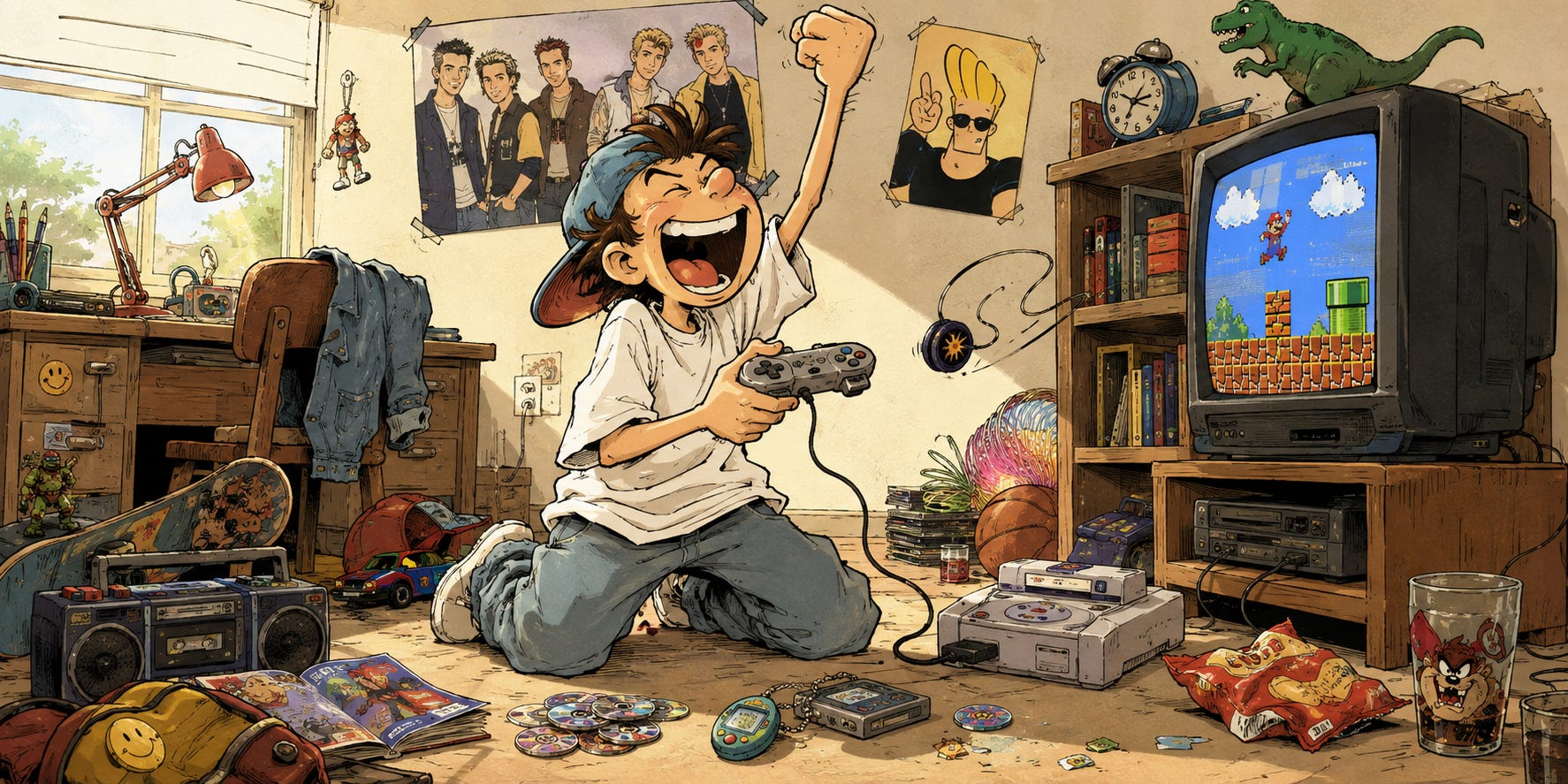
In today’s dialogue, two friends remember the little things they miss from the 90s and early 2000s and wonder whether life was really better back then.
Viel Spaß!
Part 1 - Read 👀
Read the Dialogue (out loud if you can)
Mia: Ich hab gestern aus Versehen eine alte MSN-Playlist auf YouTube gefunden – so eine, die jemand hochgeladen hat mit den alten Klingeltönen und Statusmeldungen. Ich hab eine Stunde lang dagesessen und einfach nur geschaut.
Tobi: Ich versteh das komplett. Ich hab letzte Woche mein altes Nokia 3310 gefunden. Das Ding ⍟ hat noch Akku gehabt. Nach fünfzehn Jahren. Ich hab Snake gespielt bis Mitternacht und mich dabei so unglaublich geborgen ⍟ gefühlt.
Mia: Geborgen! Genau das ist das Wort. Ich weiß auch nicht, warum Pixelschlangen auf einem grauen Display so ein Gefühl von Sicherheit auslösen, aber es tut es einfach. Und weißt du was ich auch vermiss? Samstagnachmittag, TKKG im Radio.
Tobi: TKKG! Ich hab die Kassetten noch. Irgendwo im Keller meiner Eltern stehen die in einer Schuhschachtel. Und ich mach das irgendwann auf und rieche diesen alten Plastikgeruch – und bin sofort wieder acht Jahre alt. Nostalgie über den Geruchssinn, das ist die brutalste ⍟ Variante.
Mia: Absolut. Ich hab das mal mit dem Duft von Wachsmalstiften.
Tobi: Ich hab früher auf Briefe gewartet. Echte Briefe, handgeschrieben. Ich hatte eine Brieffreundin in Frankreich, Céline, in der fünften Klasse. Ich hab ihr Briefe auf Papier geschrieben, mit Tipp-Ex ⍟ drauf, weil ich immer Fehler gemacht hab. Das hat so lange gedauert – und war irgendwie so viel bedeutsamer als heute eine WhatsApp in drei Sekunden.
Mia: Wir haben komplett verlernt, auf Dinge zu warten. Früher war Vorfreude ein Gefühl, das Wochen gedauert hat. Heute bestell ich was um elf und bin um vier sauer, dass es noch nicht da ist.
Tobi: Ich hab neulich einen Film auf DVD geschaut, den ich noch zuhause hatte. Ich musste warten, bis er lädt, musste durch die Werbung, konnte nicht skippen ⍟ – und irgendwas daran war so angenehm. Diese erzwungene Langsamkeit. Als ob das Leben kurz mal Pause gemacht hat.
Mia: Wir werden zu diesen Leuten, die „früher war alles besser" sagen. Ich spür's.
You just saw what conversational German looks like. The next parts are where passive understanding turns into real training reps: 2. listen → 3. understand → 4. write → 5. speak. That’s what makes conversational German start feeling more natural!

Part 2 - Listen 👂
Hear the Dialogue (switch to slow version if the original is too quick.)
Audio 🎧
Slow Audio ⏳

Part 3 - Understand 💡
Read the explanations & translation (Go through the explanations and translation. Take your time, this is where things click.)
A) Explanations 💬
⍟ das Ding – A very common spoken shorthand used to refer to an object without naming it, often when the speaker assumes the listener knows what they mean or when the object is too obvious to need a proper name, widely usable in casual conversation about any gadget, item, or thing. (English: “the thing” or “the device”, literal: “the thing”)
⍟ geborgen – A distinctly German spoken word used to describe a feeling of warmth, safety, and being sheltered that goes beyond simple comfort, often surfacing in nostalgic or emotionally reflective conversation where “comfortable” in English falls short. (English: “safe and cosy” or “sheltered and secure”, literal: “sheltered”)
⍟ die brutalste – A spoken superlative used here not to mean violent but to convey that something is the most powerful or overwhelming version of a feeling, a common informal intensifier in everyday German when someone wants to express that something hits especially hard. (English: “the most powerful” or “the most intense” or “the hardest-hitting”, literal: “the most brutal”)
⍟ Tipp-Ex – The standard spoken term for correction fluid, used so universally as a brand name that it functions as a common noun in everyday German, a piece of vocabulary that immediately evokes the pre-digital era of handwriting and physical correction. (English: “Tipp-Ex” or “correction fluid” or “white-out”)
⍟ skippen – A naturalised English loanword used in everyday spoken German to mean skipping past something, particularly ads, intros, or content you don’t want to sit through, so thoroughly integrated into casual speech that the German alternative “überspringen” would sound stiff in this context. (English: “to skip”, literal: borrowed directly from English)
B) Translation 🔄
Mia: Yesterday I accidentally found an old MSN playlist on YouTube – one of those that someone uploaded with the old ringtones and status messages. I sat there for an hour and just watched.
Tobi: I completely get that. Last week I found my old Nokia 3310. The thing still had battery. After fifteen years. I played Snake until midnight and felt so incredibly safe and cosy the whole time.
Mia: Safe and cosy! That's exactly the word. I don't know why pixel snakes on a grey screen trigger that kind of security, but they just do. And you know what else I miss? Saturday afternoons, TKKG on the radio.
Tobi: TKKG! I still have the cassettes. Somewhere in my parents' basement in a shoebox. And one day I'll open it and smell that old plastic – and I'm instantly eight years old again. Nostalgia through the sense of smell, that's the most intense version.
Mia: Absolutely. I get that with the smell of wax crayons.
Tobi: I used to wait for letters. Real letters, handwritten. I had a pen pal in France, Céline, in fifth grade. I wrote her letters on paper, with Tipp-Ex all over them because I kept making mistakes. It took so long – and was somehow so much more meaningful than firing off a WhatsApp in three seconds today.
Mia: We've completely lost the ability to wait for things. Back then, anticipation was a feeling that lasted weeks. These days I order something at eleven and by four I'm annoyed it's not here yet.
Tobi: I watched a film on DVD the other day, one I still had at home. I had to wait for it to load, had to sit through the ads, couldn't skip – and something about that was so pleasant. That enforced slowness. As if life had briefly pressed pause.
Mia: We're turning into those people who say "everything was better back then." I can feel it.
Part 4 - Write ✍️
Writing Practice (this step is easy to skip, but it’s where real progress happens)
Answer ONE of these:
Warum fühlen sich viele Menschen nostalgisch?
Welche Erinnerungen aus deiner Kindheit machen dich besonders nostalgisch?
Kann Nostalgie eher helfen oder einen am Leben in der Gegenwart hindern? Warum?
👉 Reply to this email or comment below.
Part 5 - Speak 🗣️
Spoken Conversation Practice (This is the part that gets you speaking more naturally, faster.)
Have a short 3–5 minute conversation with your favorite AI (ChatGPT, Claude, Gemini, etc.).
Follow today’s topic
Or choose your own
Ask the AI for corrections and feedback afterwards
AI isn't a substitute for real conversations with people, but it's a great way to practise when no conversation partner is available.
Was macht dich nostalgisch? 📼
Was there something in today’s dialogue that reminded you of your own childhood?
Reply and let me know. I’m curious what people from different countries miss the most.
LG
Marwan