


Hallo zusammen!
These dialogues and learning units are part of a structured program designed to help you systematically improve your conversational German and feel more at ease when speaking.
Go through it at your own pace, stay consistent and most importantly, enjoy the process!
Part 1 - Read 👀
Read the Dialogue (out loud if you can)
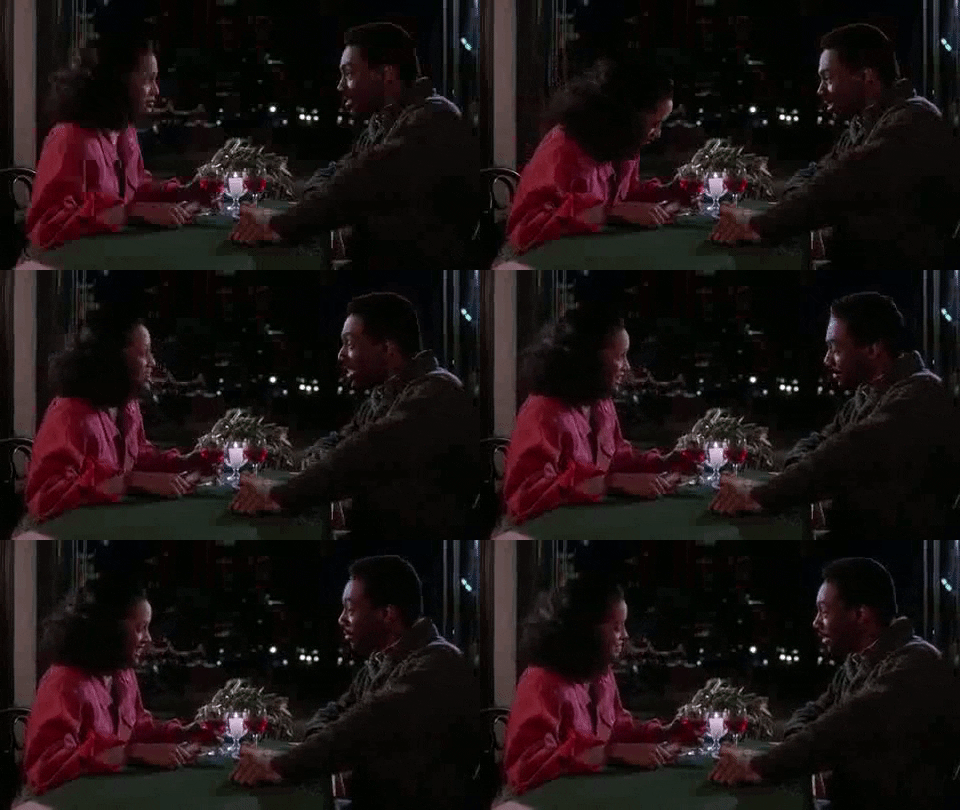
Berta: Na, wie war dein Date gestern?
Anja: Gut. Also - wirklich gut. Ich hätt's nicht erwartet, ehrlich gesagt.
Berta: Erzähl mal. Wo wart ihr?
Anja: Erst in einem kleinen Weinlokal in Schwabing, total entspannte Atmosphäre. Und er war… nett. Wirklich nett.
Berta: Oh, das ist ja schon mal was ⍟. Und - hat's gefunkt? ⍟
Anja: Ich glaub schon? Aber ich merk halt, dass ich das alles so ein bisschen verlernt hab ⍟. Wie man flirtet, wie man sich gibt, wann man was sagt. Ich hab irgendwann angefangen, über meinen Ex zu reden, und hab mich dann selbst unterbrochen.
Berta: Nein. Wirklich?
Anja: Ja. Ich hab einfach gesagt: „Okay, das Thema skip ich jetzt" ⍟ - und er hat gelacht. Zum Glück.
Berta: Das klingt eigentlich süß. Und er? Erzähl mal was über ihn.
Anja: Architekt, Mitte dreißig, geschieden, ein Kind - was er gleich am Anfang gesagt hat, was ich gut fand. Kein Rumdrucksen ⍟, einfach direkt.
Berta: Okay, der klingt tatsächlich solide. Seht ihr euch nochmal?
Anja: Er hat gefragt, ob ich nächste Woche Zeit hab. Ich hab Ja gesagt, aber dann danach kurz bereut, weil - ich weiß nicht - was wenn's beim zweiten Mal nicht mehr so locker ist?
Berta: Anja. Du warst zwei Jahre nicht daten. Natürlich bist du nervös. Das ist völlig normal.
Anja: Ich weiß, ich weiß. Ich dreh's halt im Kopf rum.
Berta: Ach komm, der mag dich! Das war doch eindeutig.
Anja: Denkst du echt?
Berta: Ja. Schreib ihm einfach!

Part 2 - Listen 👂
Hear the Dialogue (switch to slow version if the original is too quick)
Audio 🎧
Slow Audio ⏳

Part 3 - Understand 💡
Read the explanations & translation (take your time, ask questions in the comments if something is unclear)
A) Explanations 💬
⍟ das ist ja schon mal was - A common spoken phrase used to acknowledge something as a positive first step without overpromising, where the particle “ja” adds a tone of mild pleasant surprise. (English: “that’s already something” or “well, that’s a good sign at least”)
⍟ hat’s gefunkt? - A colloquial spoken question used to ask whether two people felt a romantic spark or instant chemistry, very common in informal conversation about dates or new encounters. (English: “did you feel a spark?” or “was there chemistry?”, literal: “did it spark?”)
⍟ verlernt hab - The past form of “verlernen,” used in everyday speech to describe having lost a skill or habit through lack of practice, often said with a mix of self-awareness and mild regret. (English: “forgotten how to” or “lost the knack for”, literal: “un-learned”)
⍟ das Thema skip ich jetzt - A casual, code-switching phrase where the English verb “skip” is used naturally in spoken German to mean deliberately moving past a topic, common among younger urban speakers. (English: “I’m going to skip that topic now” or “let’s just move past that”)
⍟ kein Rumdrucksen - A colloquial noun used to describe the avoidance of beating around the bush, typically said approvingly about someone who communicates directly and without hesitation. (English: “no beating around the bush”, literal: “no pressing-around”)
B) Translation 🔄
Berta: So, how was your date yesterday?
Anja: Good. Like - really good. I honestly didn't expect it.
Berta: Tell me everything. Where did you go?
Anja: This little wine bar in Schwabing, really relaxed atmosphere. And he was… nice. Actually nice, not nice-in-his-profile nice, but genuine-human-being nice.
Berta: Oh, that's already something. And - did you feel a spark?
Anja: I think so? But I can tell I've kind of lost the knack for all of it. How to flirt, how to carry myself, when to say what. At some point I started talking about my ex and then just stopped myself.
Berta: No. Really?
Anja: Yeah. I just said: "Okay, I'm skipping that topic" - and he laughed. Thank god.
Berta: That actually sounds sweet. And him? Tell me something about him.
Anja: Architect, mid-thirties, divorced, one kid - which he mentioned right at the start, and I appreciated that. No beating around the bush, just straightforward.
Berta: Okay, he actually sounds solid. Are you seeing each other again?
Anja: He asked if I'm free next week. I said yes, but then immediately second-guessed myself, because - I don't know - what if it's not as easy the second time around?
Berta: Anja. You haven't dated in two years. Of course you're nervous. That's completely normal.
Anja: I know, I know. I just keep going over it in my head.
Berta: Oh come on, he likes you! That was pretty obvious.
Anja: You really think so?
Berta: Yes. Just text him!

Part 4 - Write ✍️
Writing Practice (don’t skip, writing trains your brain to actively form sentences, and this carries over into speaking)
Answer ONE of these:
Wie unterscheidet sich Dating auf Deutsch von Dating in deiner Kultur?
Welche sprachlichen oder kulturellen Herausforderungen gibt es beim Dating auf Deutsch?
Welche Rolle spielt Sprache beim Kennenlernen neuer Menschen?
Send me your text by replying to this email, and I will answer + give feedback to the first 20 replies!
(check your spam folder just in case)
💬 Alternatively:
Post your answer in the comments.
(you are more likely to get feedback)
Part 5 - Speak 🗣️
Spoken Conversation Practice (This is the part that gets you speaking more naturally, faster.)
Have a short 3–5 minute conversation with your favorite AI (ChatGPT, Claude, Gemini, etc.).
Follow today’s topic
Or choose your own
Ask the AI for corrections and feedback afterwards
AI isn’t a substitute for real conversations with people, but it’s a great way to practise when no conversation partner is available.
Schon mal auf Deutsch gedatet?
If this dialogue felt familiar (or slightly confusing 😄), send it to someone who’s navigating dating in German too.
And if you enjoyed it, tap ♥ and share it. Let’s make these conversations travel.
LG
Marwan