

Schön, dass ihr alle da seid.
I still know very little about most of you…
So I’d be very curious to hear from you!
Who are you? Where are you from? Why are you learning German? And what do you struggle with the most right now?
Let me know and reply to this email or leave a comment!

Part 1 - Read 👀
Read the Dialogue (out loud if you can)
Arne: So, Feierabend. Ich sag’s dir ⍟, dieser Kampagnen-Report hat mich heute echt fertig gemacht.
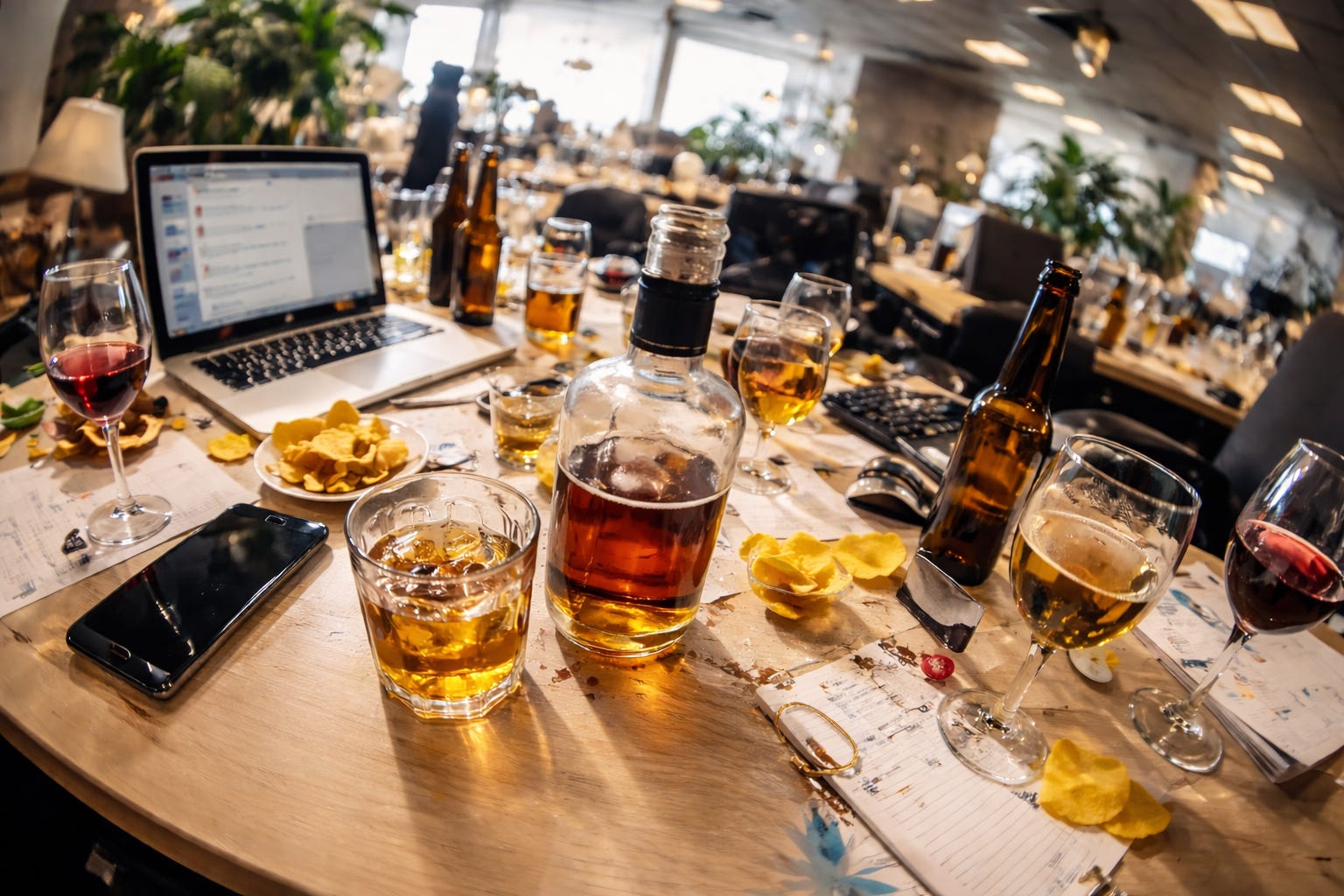
Nils: Ja, ging mir ähnlich. Aber dafür haben wir jetzt wenigstens das hier. (öffnet eine Flasche) Ein Feierabendbier im Büro hat schon was ⍟.
Arne: Schon irgendwie verrückt, oder? In manchen Firmen wäre das ja komplett undenkbar gewesen.
Nils: Total. Bei meinem alten Job im Konzern… da wäre das sofort ein HR-Gespräch gewesen.
Arne: Ja gut, hier im Start-up ist halt alles ein bisschen lockerer. Solange die Arbeit erledigt ist, sagt keiner was ⍟.
Nils: Genau. Und wir trinken ja jetzt auch nicht während der Meetings. Wobei… das würde manche Meetings vielleicht sogar verbessern.
Arne: Stimmt. Ein Bier und plötzlich sind alle kreativer.
Nils: Oder ehrlicher.
Arne: Ehrlicher wäre manchmal gar nicht schlecht. Dann würde vielleicht endlich jemand sagen, dass diese neue Social-Media-Strategie… na ja… sagen wir mal ⍟ optimistisch ist.
Nils: Vorsichtig formuliert. Aber hey, dafür sind wir ja hier. Online-Marketing im Tech-Start-up - klingt immer glamouröser, als es am Ende ist ⍟.
Arne: Ja, außen denken alle: „Oh cool, Start-up!“ In Wirklichkeit sitzt man halt den ganzen Tag vor Excel und Ads-Managern.
Nils: Und freut sich dann über ein Bier um halb sechs.
Arne: Genau. Kleine Dinge, große Wirkung.
Nils: Also gut - auf den Feierabend.
Arne: Auf den Feierabend. Und bitte morgen keine neuen spontanen Projekte.
Nils: Haha, viel Glück damit.

Part 2 - Listen 👂
Hear the Dialogue (switch to slow version if the original is too quick)
Audio 🎧
Slow Audio ⏳

Part 3 - Understand 💡
Read the explanations & translation (take your time, ask questions in the comments if something is unclear)
A) Explanations 💬
⍟ ich sag’s dir is a conversational phrase used to emphasize what someone is about to say and often signals frustration, emphasis or honesty, spoken and informal (English: “I’m telling you”, literal: “I say it to you”).
⍟ hat schon was means something has a certain appeal or charm even if it is simple, spoken and informal (English: “there’s something nice about it”, literal: “it already has something”).
⍟ sagt keiner was means nobody complains or objects about something in a situation where it might normally be questioned, spoken and informal (English: “no one says anything about it”, literal: “no one says anything”).
⍟ sagen wir mal is a softening phrase used before a critical or careful statement to make it sound less direct, spoken and neutral (English: “let’s say”, literal: “let us say”).
⍟ klingt immer glamouröser, als es am Ende ist describes how something appears more exciting or impressive than the reality turns out to be, neutral spoken language (English: “it always sounds more glamorous than it actually is”, literal: “it sounds more glamorous than it is at the end”).
B) Translation 🔄
Arne: So, end of the workday. I’m telling you, that campaign report completely drained me today.
Nils: Same here. But at least we’ve got this now. (opens a bottle) A post-work beer in the office does have something nice about it.
Arne: Kind of crazy, right? In some companies that would be completely unthinkable.
Nils: Totally. At my old corporate job that would have turned into an HR meeting immediately.
Arne: Well, here in the start-up everything’s a bit more relaxed. As long as the work gets done, nobody complains.
Nils: Exactly. And we’re not drinking during meetings either. Although… that might actually improve some meetings.
Arne: True. One beer and suddenly everyone’s more creative.
Nils: Or more honest.
Arne: Honestly wouldn’t be so bad sometimes. Then maybe someone would finally say that this new social media strategy… well… let’s say it’s optimistic.
Nils: That’s putting it politely. But hey, that’s why we’re here. Online marketing in a tech start-up always sounds more glamorous than it really is.
Arne: Yeah, from the outside everyone thinks: “Oh cool, a start-up!” In reality you just sit in front of Excel and ad managers all day.
Nils: And then you celebrate a beer at half past five.
Arne: Exactly. Small things, big impact.
Nils: Alright then. To the end of the workday.
Arne: To the end of the workday. And please no spontaneous new projects tomorrow.
Nils: Haha. Good luck with that.

Part 4 - Write ✍️
Writing Practice (don’t skip, writing trains your brain to actively form sentences, and this carries over into speaking)
Answer ONE of these:
Was hältst du von Alkohol im Büro?
In welchen Situationen wäre das deiner Meinung nach akzeptabel?
Welche Vor- und Nachteile könnte das für die Arbeit haben?
Send me your text by replying to this email, and I will answer + give feedback to the first 20 replies!
(check your spam folder just in case)
💬 Alternatively:
Post your answer in the comments.
(you are more likely to get feedback)
Part 5 - Speak 🗣️
Spoken Conversation Practice (This is the part that gets you speaking more naturally, faster.)
Have a short 3–5 minute conversation with your favorite AI (ChatGPT, Claude, Gemini, etc.).
Follow today’s topic
Or choose your own
Ask the AI for corrections and feedback afterwards
AI isn’t a substitute for real conversations with people, but it’s a great way to practise when no conversation partner is available.
Zum Feierabend noch eine kleine Sache…
If this dialogue reminded you of someone at work, send it to them.
Let’s see who says “why not?” and who says “absolutely not.”

And don’t forget, I’m still curious about who’s reading this!
Feel free to reply to this email and tell me a bit about yourself.
LG
Marwan