

Hallo zusammen!
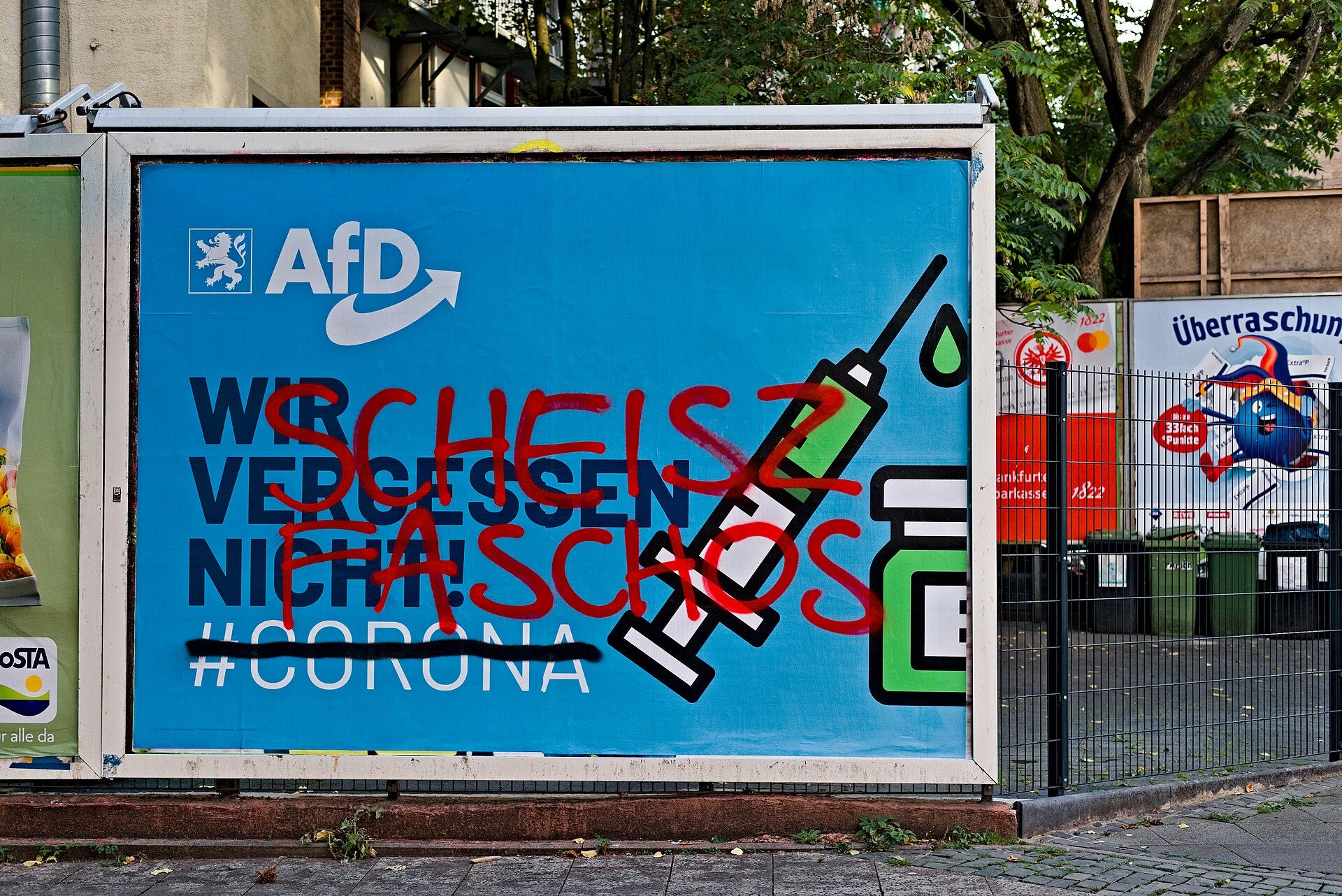
Today’s topic: die AfD. A controversial and unavoidable one. It shapes debates about identity, migration, and the future of Germany. Sooner or later, if you live in Germany, you’ll probably talk about it. 🤔
Part 1 - Read 👀
Read the Dialogue (out loud if you can)
Silke: Ich muss dir was erzählen. Mein Nachbar - der Herr Brandt, den ich eigentlich ganz nett fand - hat mir gestern einfach so erzählt, dass er AfD wählt. Offen, ohne zu zögern. Ich hab nicht gewusst, was ich sagen soll.
Anna: Ja, das ist unangenehm. Aber ich kann dir zumindest erklären, warum Leute das machen - auch wenn ich's nicht gut finde.
Silke: Bitte. Weil ich's wirklich nicht kapiere.
Anna: Viele AfD-Wähler sind keine überzeugten Rechten. Die sind frustriert - über Preise, über Wohnungen, über das Gefühl, dass die Politik an ihnen vorbeiredet ⍟. Und die AfD spricht die direkt an, einfach, laut, ohne Umwege. Das zieht ⍟.
Silke: Okay, das versteh ich noch. Aber dann wähl doch SPD oder sonst was - warum ausgerechnet die ⍟?
Anna: Weil die anderen Parteien dieses Gefühl jahrelang ignoriert haben. Das ist das eigentliche Problem. Die AfD hat eine Lücke gefüllt, die andere hinterlassen haben ⍟. Das ist weltweit so - Trump, Le Pen, Meloni - das ist kein deutsches Phänomen.
Silke: Aber die Lösungen, die die anbieten - Grenzen dicht, raus mit allen, zurück zu irgendwas - das funktioniert doch nicht.
Anna: Nein, funktioniert es nicht. Die Zahlen zeigen das ziemlich klar - Einwanderung ist gesamtwirtschaftlich positiv, der Fachkräftemangel ist real, und Abschottung löst das nicht. Aber darum geht's vielen Wählern gar nicht primär. Die wollen gehört werden, nicht unbedingt die beste Politik.
Silke: Das macht's irgendwie noch schlimmer, oder? Weil man dann gar nicht mehr über Inhalte redet.
Anna: Genau das ist die Falle. Und solange die anderen Parteien das nicht ernstnehmen - also das Gefühl, nicht nur die Zahlen - wird sich das nicht so schnell ändern ⍟.
Silke: Ich weiß nicht… ich schau ihn jetzt halt anders an.
Anna: Ja. Das ist normal. Muss ja nicht gleich ein Riesending werden.
Silke: Nein. Aber so wie vorher wird's auch nicht mehr.

Part 2 - Listen 👂
Hear the Dialogue (switch to slow version if the original is too quick)
Audio 🎧
Slow Audio ⏳

Part 3 - Understand 💡
Read the explanations & translation (take your time, ask questions in the comments if something is unclear)
A) Explanations 💬
⍟ die Politik an ihnen vorbeiredet - A vivid spoken expression describing the feeling that politicians talk past ordinary people rather than addressing their actual concerns, used informally to capture a sense of being ignored or talked over by those in power. (English: “politics talks right past them”, literal: “politics talks past them”)
⍟ das zieht - A short, punchy colloquial expression used to say that something has real pull or appeal, often to explain why a message, person, or idea attracts people even when the speaker has reservations about it. (English: “that works” or “that draws people in”, literal: “that pulls”)
⍟ ausgerechnet die - A spoken expression used to express exasperation or disbelief that someone chose a specific option above all others, implying that this particular choice is especially hard to understand or accept. (English: “of all things, them” or “why them of all people”, literal: “precisely them”)
⍟ die AfD hat eine Lücke gefüllt, die andere hinterlassen haben - A natural analytical construction used in spoken and written German to explain how something stepped in to meet a need that others failed to address, applicable well beyond politics. (English: “the AfD filled a gap that others left behind”)
⍟ wird sich das nicht so schnell ändern - A common spoken pattern used to express that a situation is unlikely to shift any time soon, typically said with a tone of sober realism rather than despair. (English: “that’s not going to change anytime soon”)
B) Translation 🔄
Silke: I need to tell you something. My neighbour - Herr Brandt, who I actually quite liked - just casually told me yesterday that he votes AfD. Openly, without hesitating. I didn't know what to say.
Anna: Yeah, that's uncomfortable. But I can at least explain why people do it - even if I don't think it's right.
Silke: Please do. Because I genuinely don't get it.
Anna: A lot of AfD voters aren't committed right-wingers. They're frustrated - about prices, about housing, about the feeling that politics is talking right past them. And the AfD speaks to them directly, simply, loudly, no detours. That draws people in.
Silke: Okay, I can still follow that. But then just vote SPD or something - why them of all parties?
Anna: Because the other parties ignored that feeling for years. That's the real problem. The AfD filled a gap that others left behind. It's the same all over the world - Trump, Le Pen, Meloni - this isn't a specifically German thing.
Silke: But the solutions they're offering - seal the borders, kick everyone out, go back to some vague past - that doesn't actually work.
Anna: No, it doesn't. The numbers make that pretty clear - immigration is a net positive for the economy, the skills shortage is real, and closing yourself off doesn't solve it. But for a lot of voters, that's not really the primary point. They want to be heard, not necessarily the best policy.
Silke: That somehow makes it even worse, doesn't it? Because then nobody's even talking about substance anymore.
Anna: That's exactly the trap. And as long as the other parties don't take that seriously - the feeling, not just the figures - that's not going to change anytime soon.
Silke: I don't know… I just look at him differently now.
Anna: Yeah. That's normal. Doesn't have to turn into a whole big thing.
Silke: No. But it won't be like it was before either.

Part 4 - Write ✍️
Writing Practice (don’t skip, writing trains your brain to actively form sentences, and this carries over into speaking)
Answer ONE of these:
Warum wählen Menschen deiner Meinung nach bestimmte politische Parteien?
Welche Faktoren beeinflussen politische Entscheidungen von Wählern?
Wie kann man respektvoll über Politik diskutieren, auch wenn man unterschiedliche Meinungen hat?
Send me your text by replying to this email, and I will answer + give feedback to the first 20 replies!
(check your spam folder just in case)
💬 Alternatively:
Post your answer in the comments.
(you are more likely to get feedback)
Part 5 - Speak 🗣️
Spoken Conversation Practice (This is the part that gets you speaking more naturally, faster.)
Have a short 3–5 minute conversation with your favorite AI (ChatGPT, Claude, Gemini, etc.).
Follow today’s topic
Or choose your own
Ask the AI for corrections and feedback afterwards
AI isn’t a substitute for real conversations with people, but it’s a great way to practise when no conversation partner is available.
Schwieriges Thema… oder wichtiges Gespräch?
If this dialogue gave you a better feel for how people actually talk about sensitive topics in German, feel free to share it with someone learning the language too.
And if you found it useful, tap ♥. It helps these kinds of real conversations reach more people.
LG
Marwan